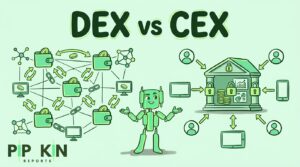
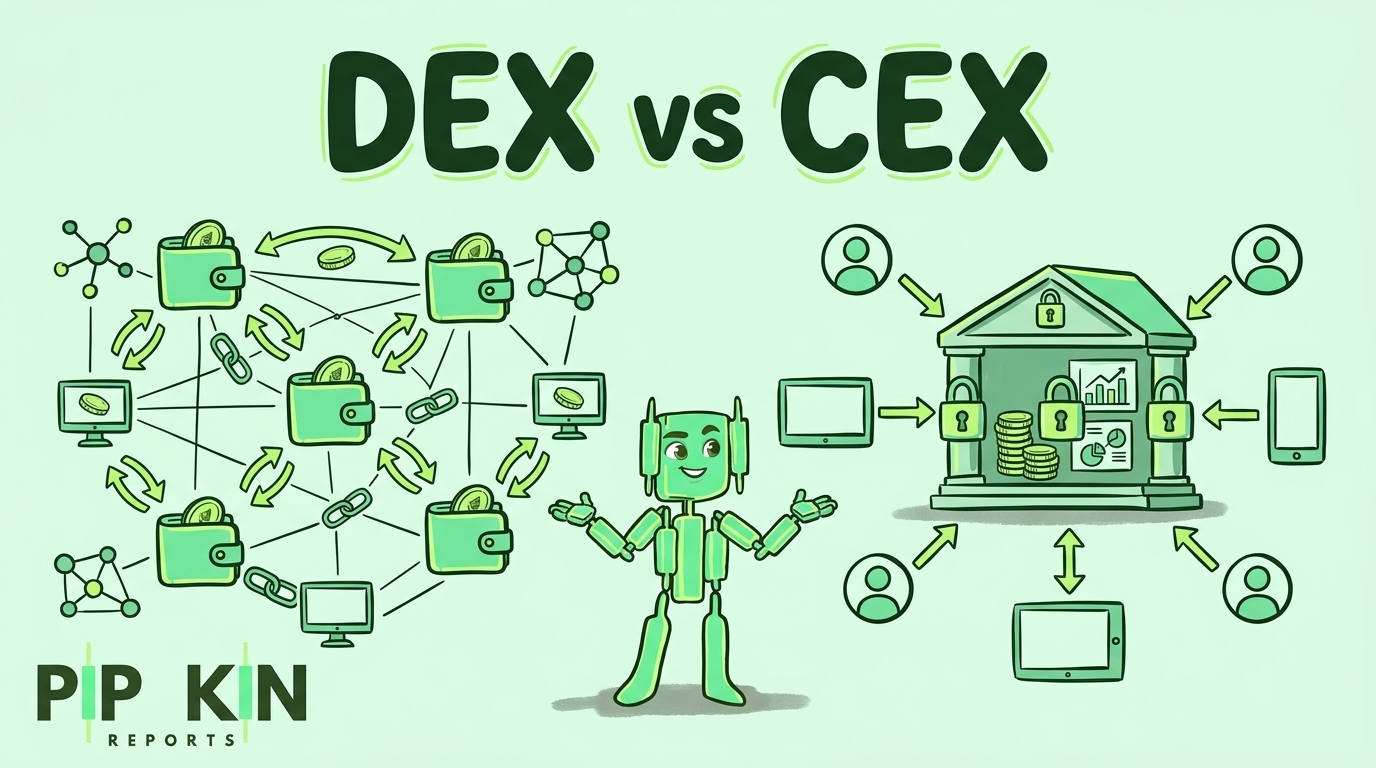
Think of crypto trading like driving a car. On one road, you sit inside a Tesla with an autopilot. You still choose the destination and when to stop, but the car controls the steering, speed, and route. It keeps you safe and comfortable yet limits how much control you have along the way. On the other road, you drive a manual car. You steer, change gears, and decide every move yourself. Freedom feels exciting, but every mistake is yours to handle. That is how CEX and DEX differ. Let’s explore DEX vs CEX in detail below.
In a CEX, you decide what to buy or sell, whereas the platform takes care of the rest. In a DEX, you do everything on your own, from connecting your wallet to making each trade. Therefore, before choosing your route, it is worth understanding how both roads lead to the same goal through very different experiences. Trading on DEXs and CEX crypto exchange platforms shows this difference clearly.
What Is a Centralized Exchange (CEX)?
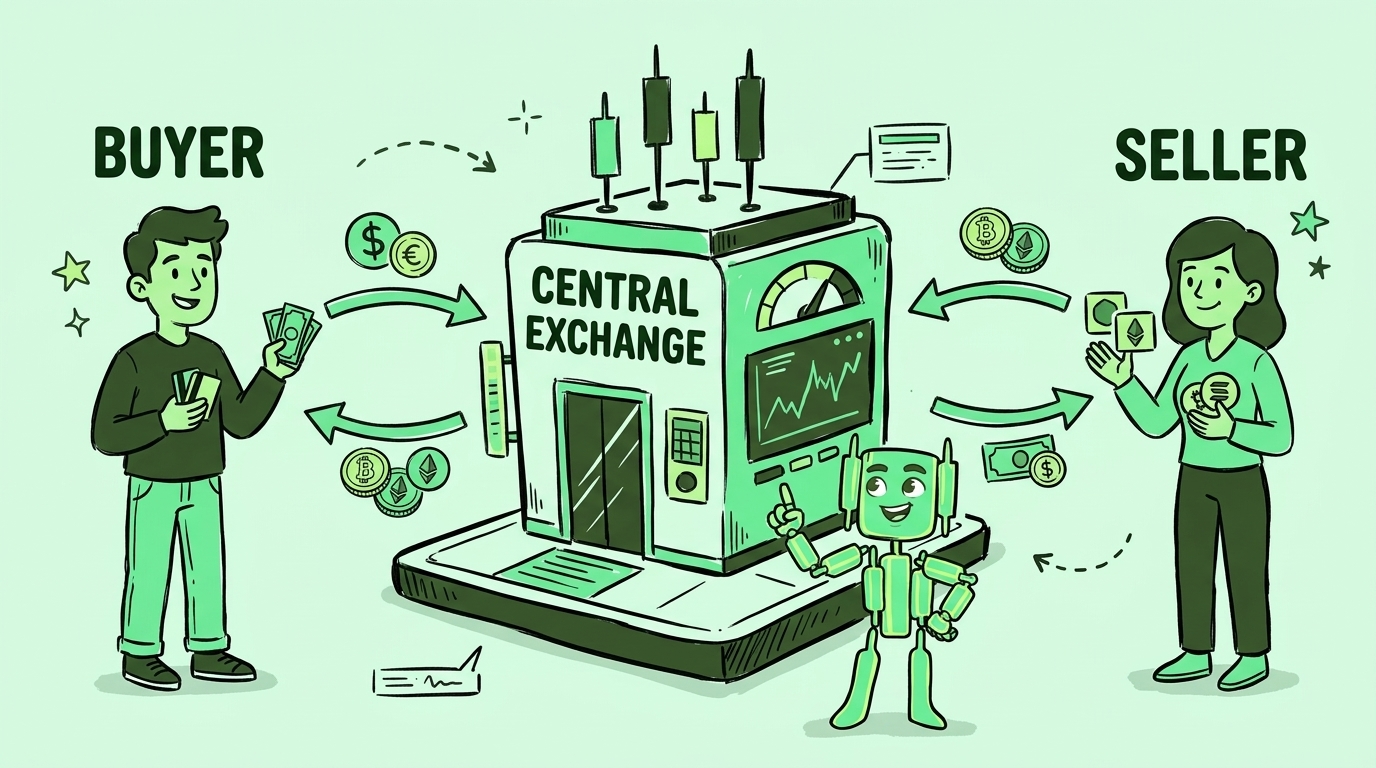
A Centralized Exchange, or CEX, works much like a regular bank. It acts as a middle point where users trade cryptocurrencies under one company’s control. Binance, Coinbase, and Kraken are some popular examples. These CEX exchange lists often include dozens of coins and tokens for trading.
When you trade on a CEX, your money goes into the company’s wallet. The exchange handles your transactions, stores your coins, and makes sure everything runs smoothly. Hence, you do not directly own your coins while they stay on the exchange.
This system feels familiar because it looks similar to traditional finance. You rely on a company to keep your digital assets and funds safe, process your orders, and maintain order. However, this comfort also brings some limits that go against crypto’s main idea of self-control.
What Is a Decentralized Exchange (DEX)?
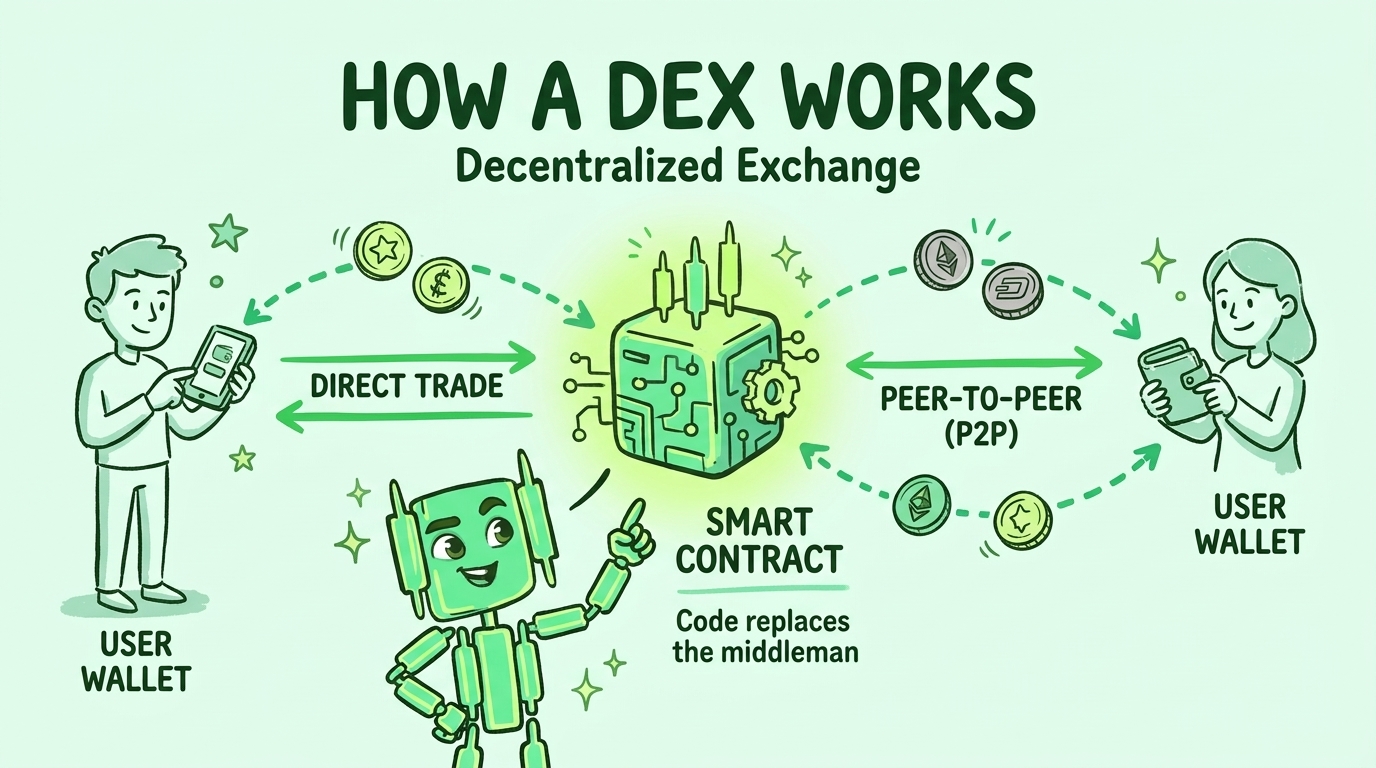
Now imagine removing the company between traders. Instead, you connect your wallet, set your trade, and the exchange happens automatically through blockchain code. That is how a Decentralized Exchange, or DEX, works.
A DEX is a marketplace where people trade directly with each other using smart contracts. These are digital agreements that complete trades without any middleman. Uniswap, PancakeSwap, and SushiSwap are well-known DEX examples. This is why decentralized exchange crypto platforms are considered more private and autonomous.
Whereas CEXs depend on companies, DEXs depend on blockchain rules and open records. When you trade on a DEX, you stay in full control of your money. You do not give it to anyone else. Therefore, when people ask what does DEX stand for, the answer is simple: Decentralized Exchange, a place that gives you full control and freedom over your funds.
However, with control comes responsibility. You must know what you are doing because, on a DEX, mistakes cannot usually be undone. A good DEX trading strategy can help reduce errors for beginners.
Pros of Centralized Exchanges (CEX)
Centralized exchanges can process thousands of trades per second, keeping prices stable. Let us discuss the main advantages of using a CEX.
1- Ease of Use
CEXs are built to be simple and guided, which makes them perfect for beginners. You can register, deposit funds, and start trading without learning technical blockchain steps.
2- High Liquidity
Centralized platforms handle many trades every second. This means there is always someone ready to buy or sell your coin. Hence, prices remain steady, and trades finish quickly. CEX systems like these provide users with reliable liquidity and speed.
3- Customer Support and Security Layers
CEX platforms also take care of their own security. If something goes wrong, users can contact customer support. This safety net is one reason many new traders start with centralized exchanges.
4- Fiat Integration
Another benefit is that you can use regular money. You can buy crypto with credit cards or bank transfers, making it easier to move between cash and digital coins.
Therefore, CEX crypto exchanges serve as easy entry points for beginners. They offer professional service with a clear structure, similar to how stock markets and forex trading work for investors.
Cons of Centralized Exchanges (CEXs)
Centralized exchanges are the top target for hackers, with billions stolen in crypto heists over the years. Let us discuss the risks and limitations of using a CEX.
1- Lack of Control
When using a CEX, you trust the platform with your funds. The company holds the private keys and manages wallets for users. Hence, you do not fully own your crypto until you withdraw it.
2- Hacks and Breaches
Since centralized platforms keep a lot of assets in one place, they often attract hackers. History has shown that such storage can be risky.
3- KYC and Regulations
CEXs also require identity verification. While this helps with safety and regulations, it reduces privacy and can block users from certain regions.
4- Possible Withdrawal Limits
Sometimes exchanges pause withdrawals during high traffic or technical issues. Hence, users depend on the company to access their funds.
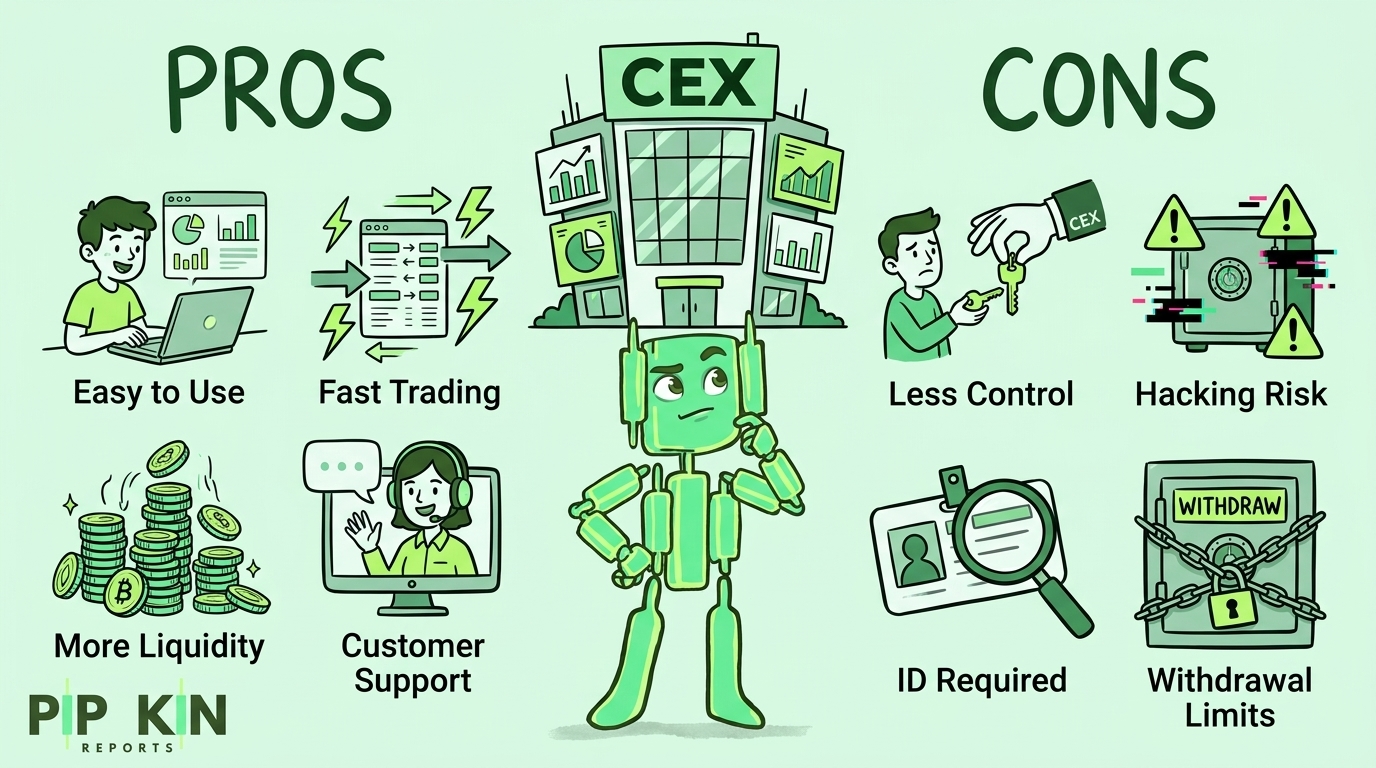
Therefore, while CEXs provide safety and ease, they still limit your control and go against the idea of complete independence. This is why understanding CEX and DEX differences is important before trading.
Advantages of Decentralized Exchanges (DEX)
DEXs allow users to trade new tokens without needing approval from a company or authority. Let us discuss why DEXs are popular among traders seeking freedom and privacy.
1- True Ownership
In DEX trading, you are the only owner of your assets. Your private keys never leave your wallet. This setup ensures that you, not anyone else, control your crypto.
2- Privacy and Accessibility
Most decentralized exchanges do not ask for ID verification. Anyone with a supported wallet can start trading instantly. Hence, DEXs give both privacy and freedom. This is one of the main decentralized trading advantages.
3- Transparency
Every transaction on a DEX is recorded on the blockchain, and anyone can check it. This open record makes it hard for anyone to hide trades or change prices unfairly.
4- Innovation and Variety
DEXs often list new tokens faster than centralized platforms. Developers can create new coins and launch projects without waiting for company approval. This freedom drives creativity and helps the crypto market grow. DEX coin launches are faster on DEX exchange crypto platforms.
5- Resilience Against Shutdowns
Because DEXs run on blockchain networks, they cannot be easily shut down. Even if one trading site goes offline, the system itself keeps running. Therefore, the network continues to work without any central control.
Drawbacks of DEXs
Some DEXs face low liquidity, which can make trades slightly more expensive or slower. Let us discuss the challenges and responsibilities of trading on a DEX.
1- Complex Interfaces
While DEXs give freedom, they also demand more effort from users. Beginners might find DEX platforms confusing. Connecting wallets, setting gas fees, and confirming trades can feel tricky at first. However, with practice, it gets easier.
2- Lower Liquidity
Compared to CEXs, DEXs sometimes have smaller trade volumes. This can cause price slippage, where the final trade price is a bit different from what you expected.
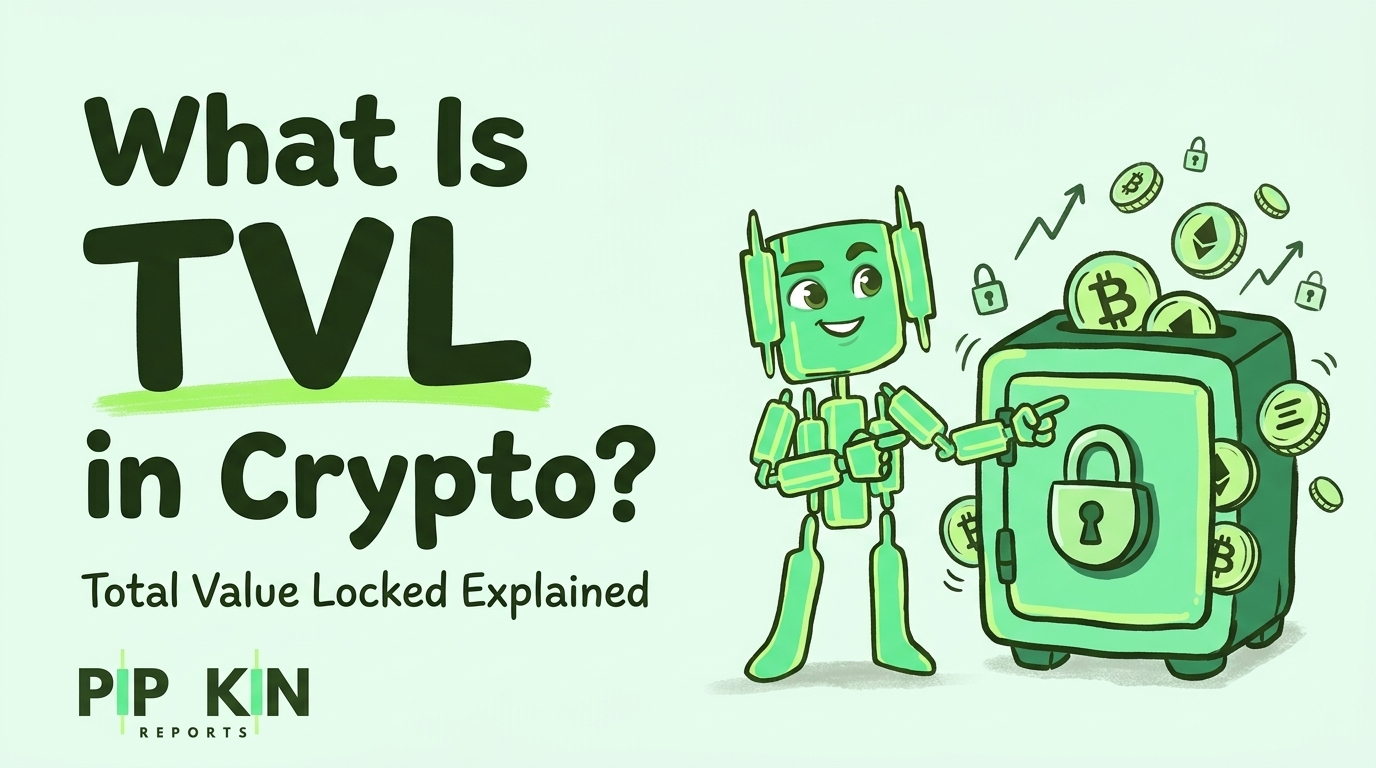
You might want to check a DEX’s liquidity before making trades on it, and one such gauge to measure it is checking the Total value locked (TVL) on that platform.
3- Smart Contract Risks
DEXs use smart contracts to manage trades, but these are still written by people. If there is a mistake in the code, hackers can take advantage of it. Hence, always research before using unknown exchanges. Be careful with lesser-known DEXes in crypto.
4- No Customer Support
Unlike CEXs, DEXs do not have customer support. If you make an error, it cannot be fixed. This freedom gives you power, yet it also carries risk.
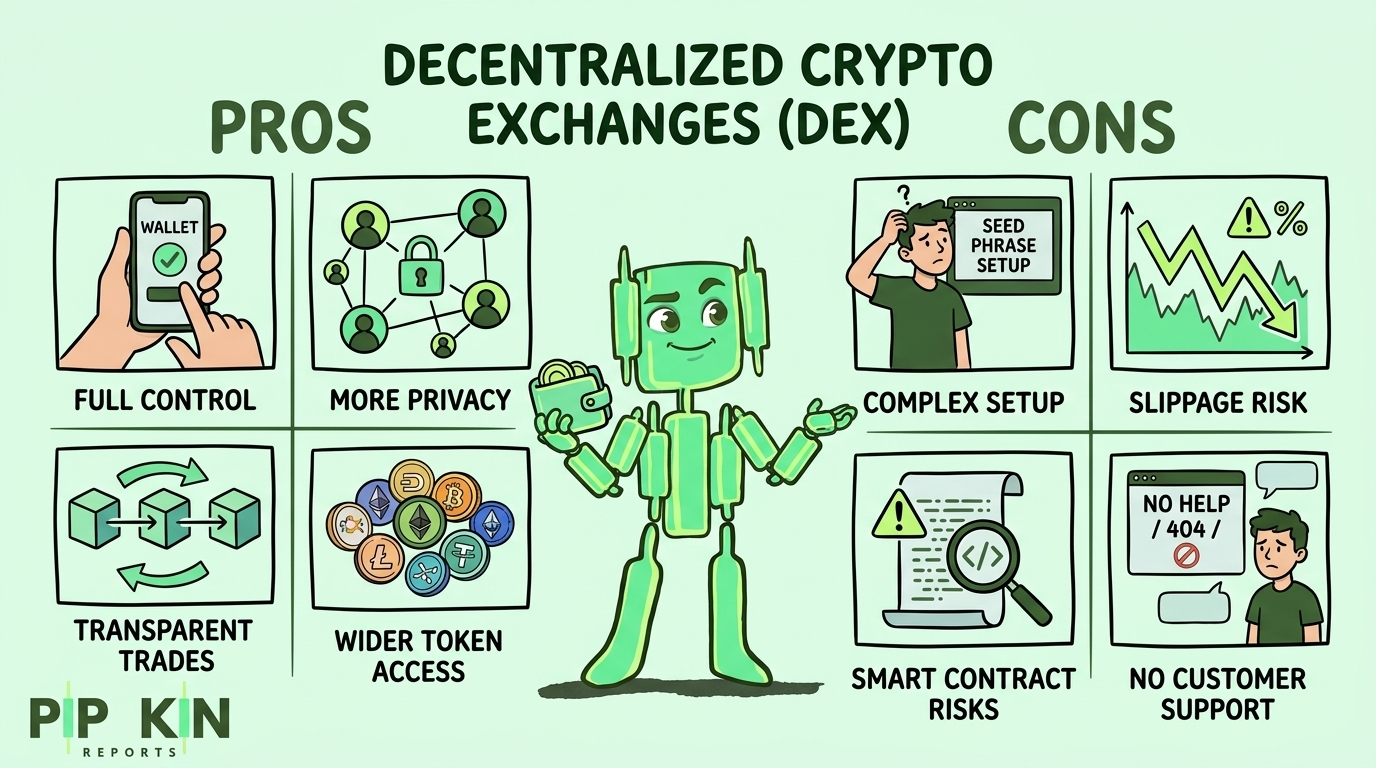
Therefore, while DEXs offer full control, they also require learning and care.
DEX vs CEX at a Glance
Even with different structures, both CEX and DEX continue to grow side by side, serving millions of traders worldwide. Check their key differences and which might suit your trading style.
DEX vs CEX Feature Comparison
| Feature | CEX (Centralized Exchange) | DEX (Decentralized Exchange) |
| Control | Platform manages transactions; you choose what to buy/sell | You control everything; full ownership of funds |
| Ease of Use | Beginner-friendly, guided interface | More technical; requires wallet setup and knowledge |
| Privacy | Requires ID verification; less private | No ID needed; trades are private |
| Speed | Fast transactions; high liquidity | Can be slower; smaller trading volumes may cause slippage |
| Support | Customer service available | No support; mistakes are usually irreversible |
| Currency Options | Supports fiat currencies (credit card, bank transfer) | Usually crypto-only; no fiat support |
| Security | Company secures funds; risk if exchange is hacked | You hold your own keys; mistakes are your responsibility |
| Token Access | New tokens listed after approval | New tokens listed quickly; more variety and freedom |
Both systems aim to make crypto trading easier, yet they serve different needs. Trade DEX and CEX strategically depending on your goals. Whereas CEXs focus on ease and speed, DEXs value control and privacy. Hence, the right choice depends on what you care about most.
Wrapping Up
In the story of DEX vs CEX, neither side is right or wrong. Both are important in shaping the crypto world. A centralized exchange feels like a secure airport, where everything is checked and managed. A decentralized exchange feels like an open sky, where you fly your own plane, free, but responsible for every move.
Hence, your choice depends on what you value more: guidance or freedom. Some traders prefer safety and support, whereas others enjoy full control over their trades.
Therefore, before deciding where to trade, take time to understand both. Knowledge, not luck, helps you trade safely and confidently in the fast-changing world of cryptocurrency. Understanding the CEX DEX difference helps you choose the right platform for your trading needs.